In an era defined by sustainable practices and optimized resource utilization, the agricultural industry is witnessing a groundbreaking transformation. Drip irrigation, a method that delivers precise amounts of water and nutrients directly to the plant roots, is emerging as a game-changer for farmers worldwide. This innovative technology not only conserves water but also enhances crop yields, reduces labor costs, and minimizes environmental impact. This article delves into the key benefits and recent advancements in drip irrigation.
Drip irrigation, also known as micro-irrigation, is a targeted watering system that provides water and fertilizers directly to plant roots in a slow, steady manner. It employs a network of tubes or pipes with emitters that release small amounts of water at regular intervals. By delivering water directly to the root zone, this method minimizes evaporation and ensures optimal moisture levels, enabling plants to absorb water efficiently. Drip irrigation can be customized to suit various crops, soil types, and topographies, making it adaptable to diverse agricultural settings.
Advantages of Drip Irrigation:
Water Conservation:
Drip irrigation stands out as a water-efficient alternative to traditional irrigation methods. It reduces water wastage significantly by delivering water directly to the plant roots, minimizing losses due to evaporation, runoff, and deep percolation. By providing targeted irrigation, this technique can save up to 50% of water compared to conventional methods, making it an invaluable tool for regions facing water scarcity or stringent water regulations.
Enhanced Crop Yield:
Drip irrigation ensures a constant supply of water and nutrients to the roots, promoting optimal plant growth and maximizing crop yield. The precise control over water delivery helps prevent both overwatering and underwatering, reducing the risk of crop stress and disease. Furthermore, the consistent moisture levels achieved through drip irrigation improve fertilizer uptake, resulting in healthier plants and increased productivity.
Labor and Energy Efficiency:
The automated nature of drip irrigation reduces labor requirements and associated costs. Once the system is properly set up, it requires minimal human intervention. This allows farmers to allocate their workforce to other essential tasks, leading to improved operational efficiency. Additionally, drip irrigation consumes less energy compared to conventional irrigation methods, as it operates at lower pressure and does not require excessive pumping.
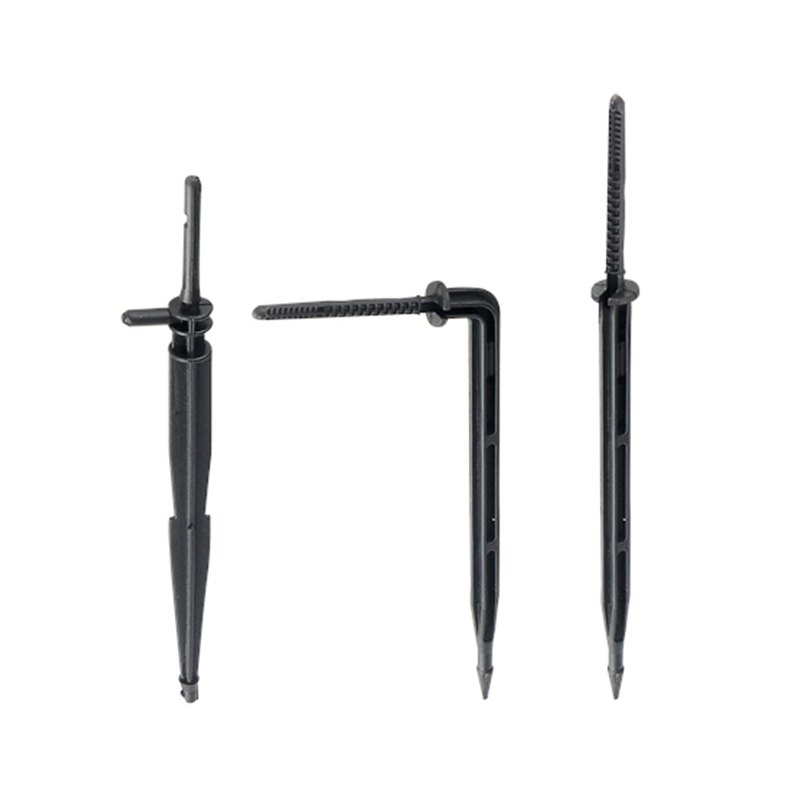
Arrow Pegs dripper potted plants
When one dripper feeds several pegs and tubes, choose a dripper with built-in flow regulation. Without it, a peg installed lower than the others releases more water than the pegs placed higher up, so plants on the same dripper are watered unevenly. Built-in flow regulation keeps the water shared evenly between pegs set at different heights.